
Downspout Repair in Honolulu, Hawaii
Where Most Overflow Problems Start
When a gutter overflows in heavy rain, the trough usually is not the problem. The downspout is. Material washes along the trough until it reaches the outlet, packs into the elbow at the top or the one at the bottom, and forms a plug that nothing dislodges from above. From the ground the gutter looks clear, which is why people are surprised when it spills over the front edge in the first serious rain of the season. The second common problem is separation. Downspout sections and elbows are usually crimped and fastened rather than sealed, and once a bracket loosens the joint pulls apart, so water runs down the wall behind the spout instead of through it. That stains the wall, keeps the siding or stucco damp, and on this island keeps it damp long enough for real problems to start. The third is capacity. A long run with a single outlet cannot move the volume that comes off a roof here in a serious downpour, no matter how clean it is, so it overtops at the far end and everyone assumes it needs cleaning. Adding a second outlet fixes permanently what cleaning fixes for a month.
The last piece is where the water ends up once it is down. A downspout discharging straight at the base of a wall is putting concentrated roof runoff against the foundation, which is the exact problem the gutter system was installed to prevent, and on a lot that drains slowly it simply pools there. Extensions, splash blocks or a tie-in that carries the discharge well clear of the structure cost very little and are frequently the one piece missing from an otherwise sound system.

What's Included in our Downspout Repair service?
Blocked and Separated Downspouts
The elbow at the bottom blocks first, and it is the hardest part to see.
Adding Downspouts to Long Runs
One outlet on a long run cannot move island rainfall fast enough.
Where the Water Should Discharge
Water put out at the foundation causes the damage the gutter was preventing.
Proudly serving Honolulu, Pearl City, Ewa Beach, Mililani, Kailua and Kaneohe for years.
Comprehensive Gutter Cleaning Services in Honolulu
Tailored to Your Needs
Cleaning is the service most homes need most often, but a clean gutter that is pulling away from the fascia or corroded through at the seam is still going to fail. Repair, guards, downspout work and full replacement are all part of what we do, so the recommendation matches what is actually on the roof.
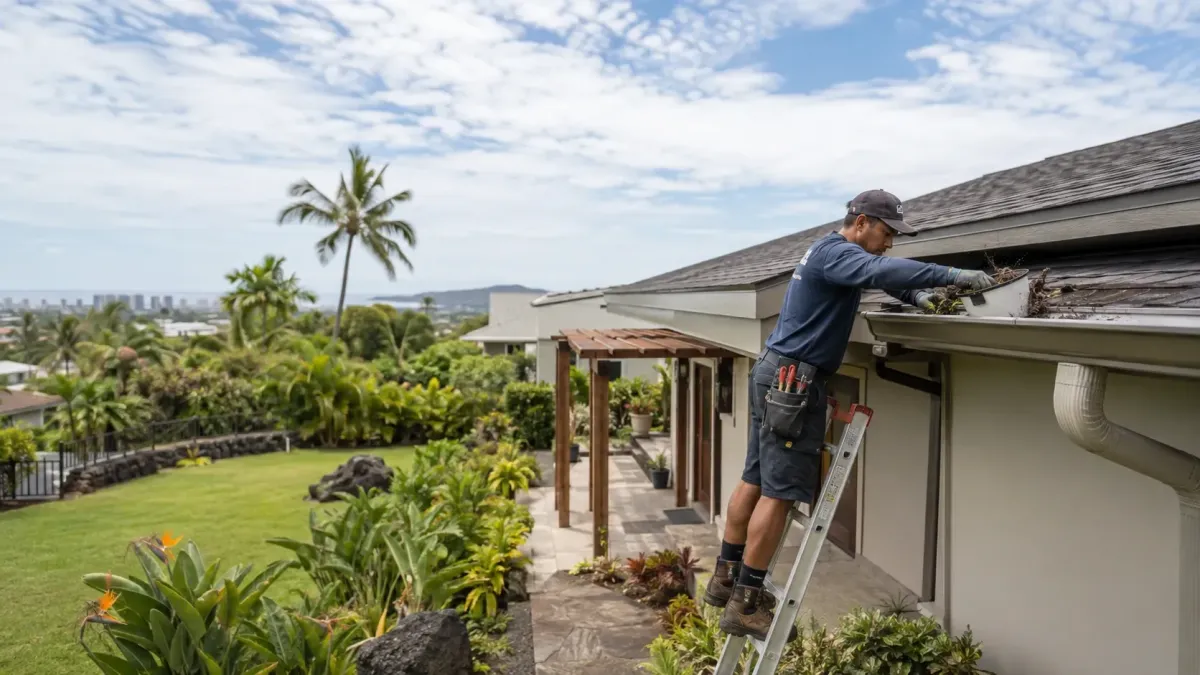
Troughs cleared by hand, downspouts flushed, fasteners checked, debris hauled off.

Leaking seams, sagging runs, pulled hangers and corroded end caps put right.

Guards matched to the debris your roof actually catches, fitted properly.
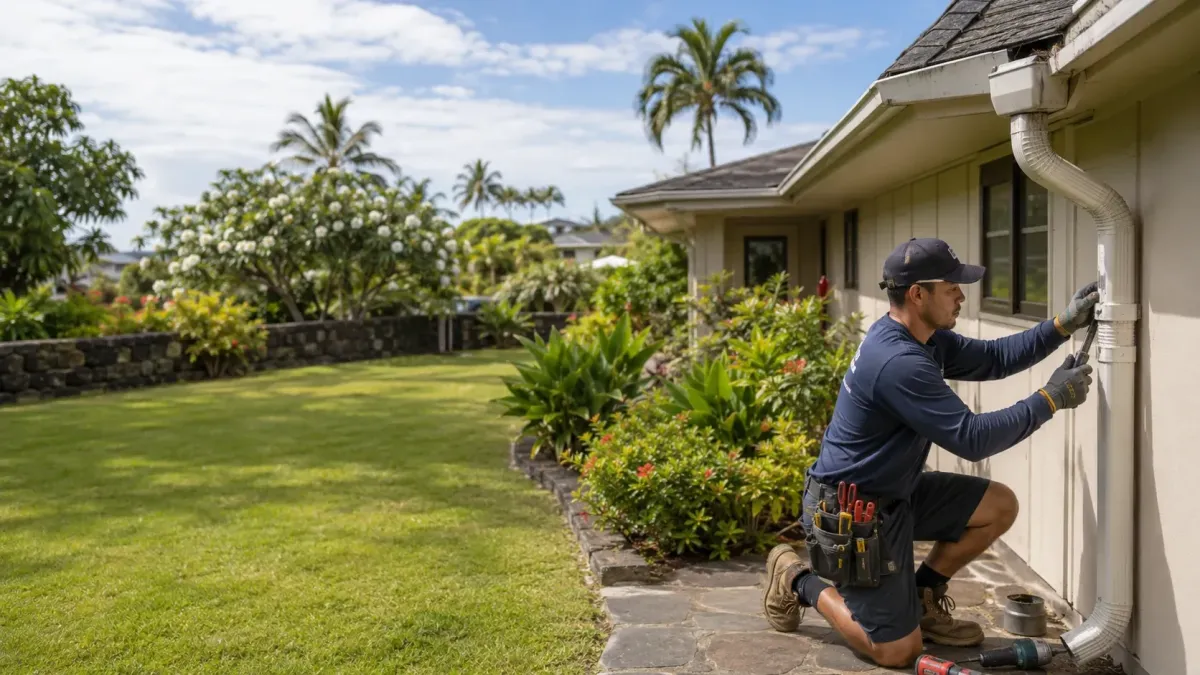
Blocked elbows cleared, separated joints resealed, and discharge redirected away from the wall.
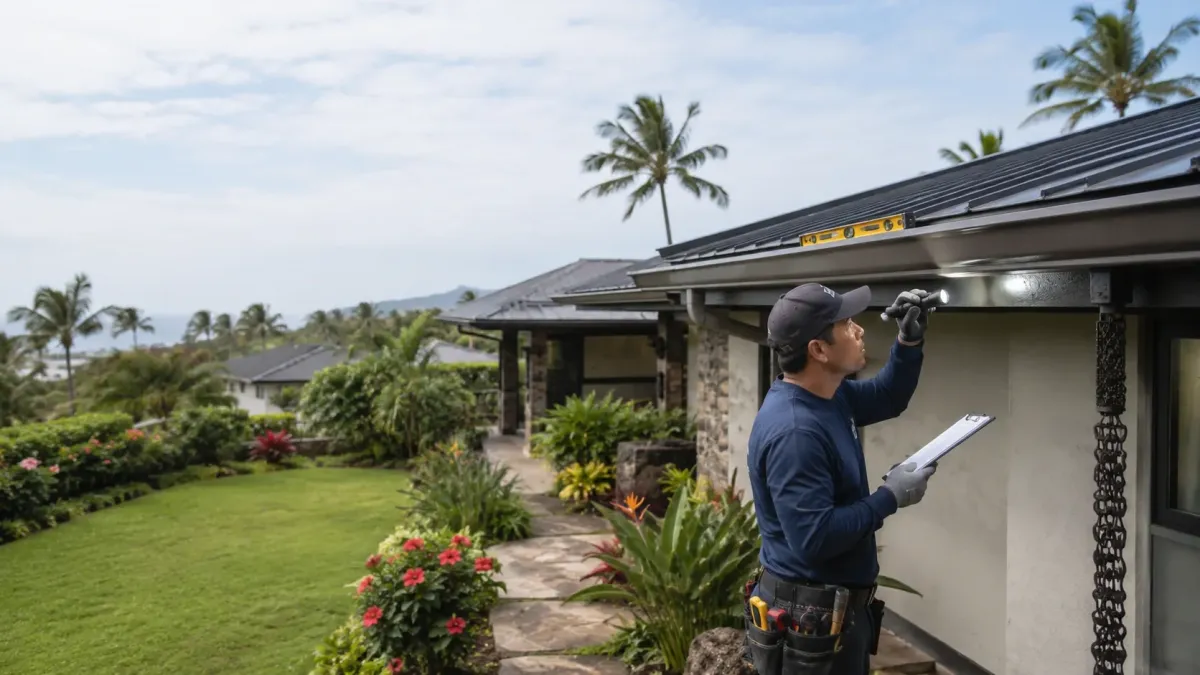
Scheduled visits timed around the wet season, with everything checked each time.
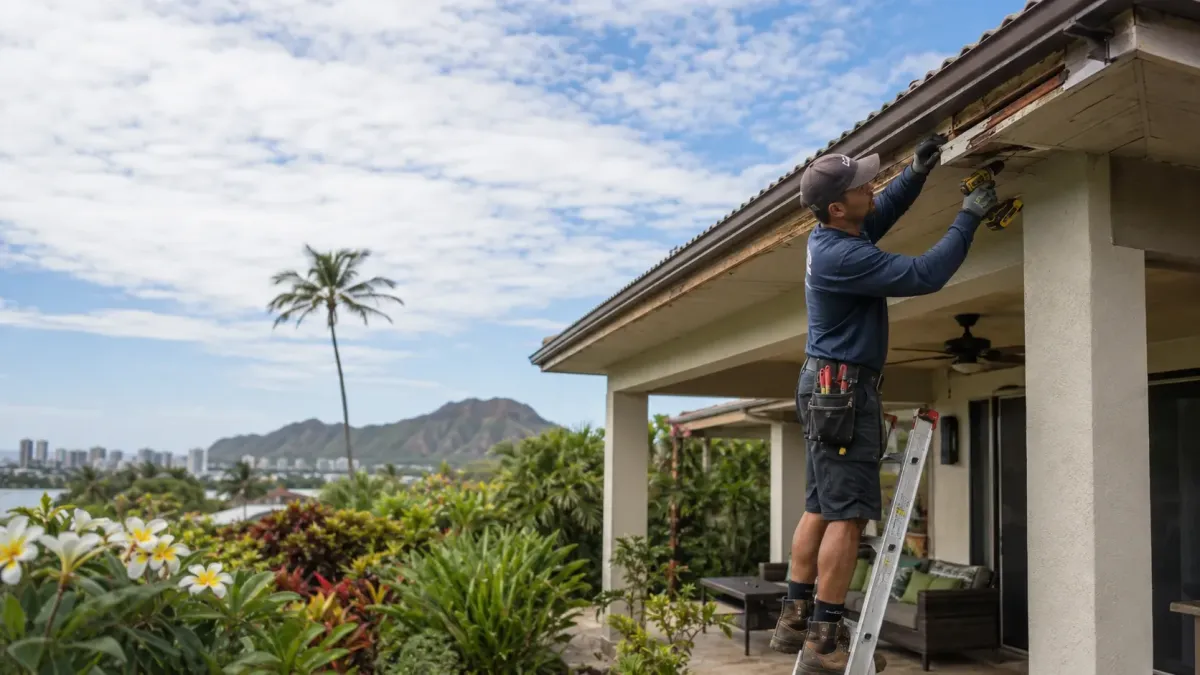
Soft fascia and damaged soffit replaced so fasteners have sound wood again.

Runs formed on site to the exact length, so there are no mid-run seams.
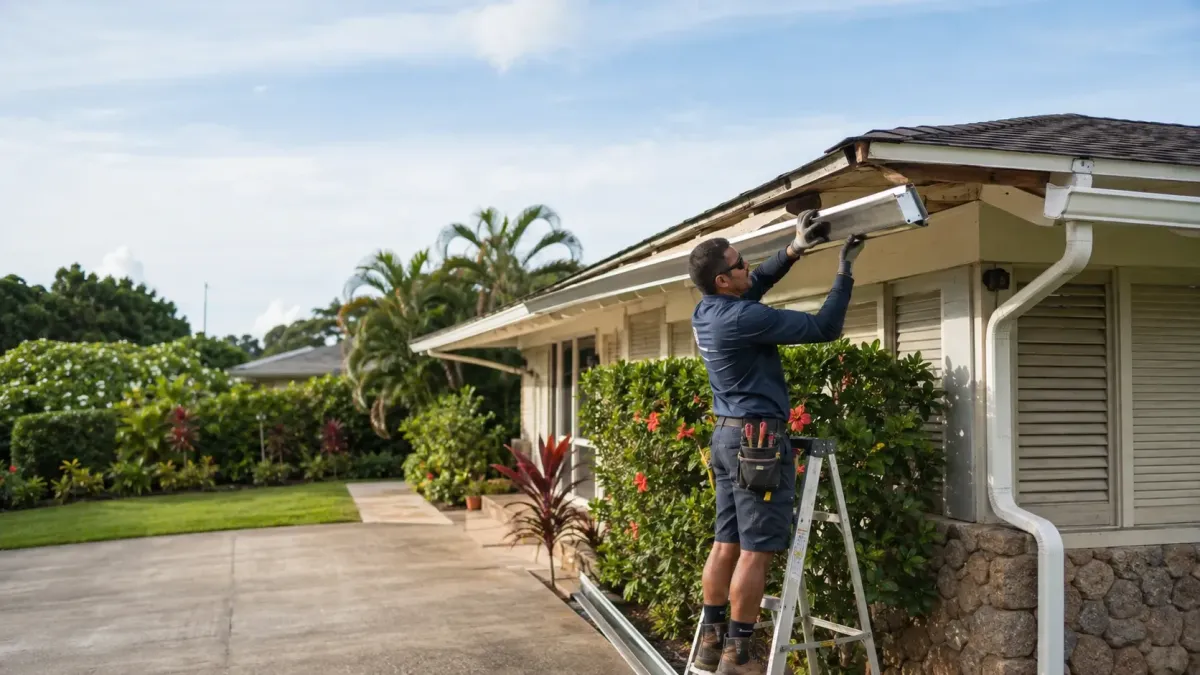
Old runs removed, fascia checked, new system sized and pitched correctly.

New systems sized to the roof, with outlets and discharge planned properly.
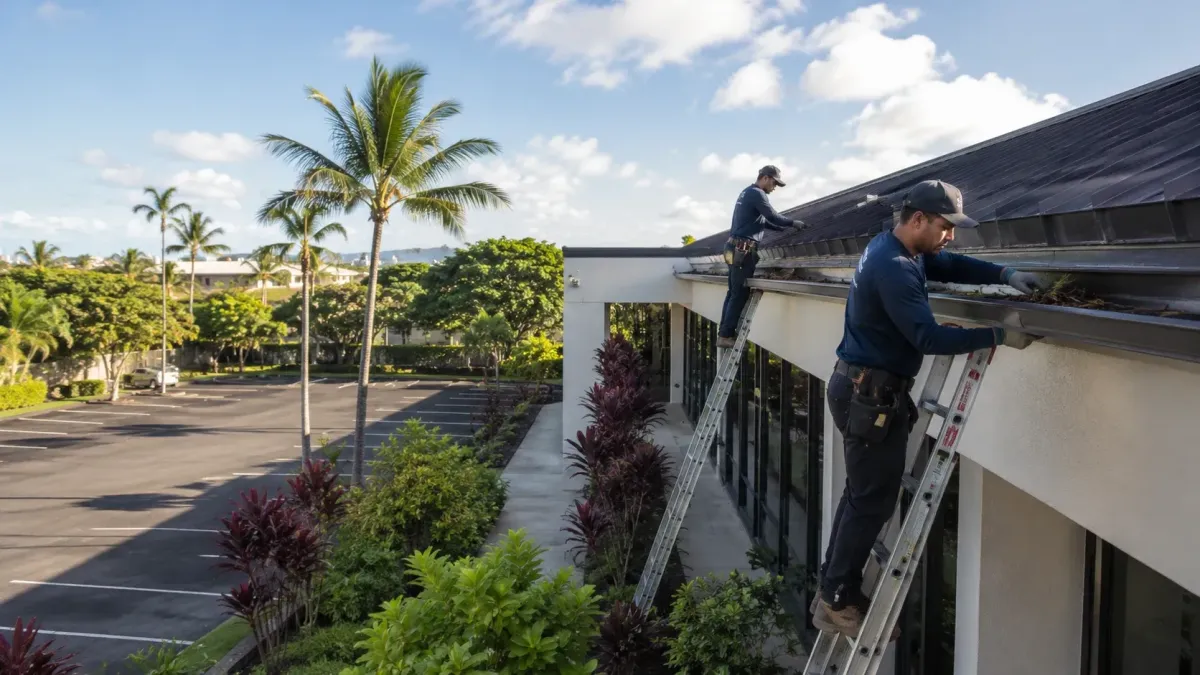
Scheduled gutter service for condominiums, associations and managed multi-building property.
Gutter Service Across Oahu
Gutter work built around Oahu weather, not mainland seasons
Oahu is small enough to cross in an afternoon and varied enough that gutter work changes completely along the way. The leeward side is dry and salty, the windward side is wet and shaded, and the central plateau sits between them with its own canopy and its own rules about changing the outside of a house.
Frequently Asked Questions
Gutter Cleaning can be complex, and we’re here to provide answers to common questions. Here are some frequently asked questions from our clients.
Frequently Asked Questions about gutter cleaning honolulu
How much does gutter cleaning cost in Honolulu?
Most single-story gutter cleanings in Honolulu land somewhere around $252 to $316, or roughly $0.70 to $1.20 per linear foot of gutter. Two-story runs, steep pitches, difficult ladder access and a heavy debris load all push it above that. We quote after looking at the roofline, because footage and access are what actually move the number.
How often should I clean my gutters in Oahu?
Plan on twice a year for most Oahu homes, once before the wet season and once after it. Houses under heavy tree canopy or right against the mountains often need three, because debris arrives constantly rather than in one seasonal drop. Coastal homes can sometimes stretch to two, but they need the fasteners and seams checked each visit instead.
What is the best time of year to clean gutters in Hawaii?
October is the single most useful month, because the wet season runs roughly November through March and you want the system clear before it starts. The second-best time is right after the rains end, when you find out what the winter actually did to the hangers and joints. Cleaning in the middle of the wet season works, but you are usually reacting to a problem by then.
Is professional gutter cleaning worth it?
It depends on the house. A single-story home with easy ladder footing and no canopy overhead is a reasonable job to do yourself. Two-story runs, tile roofs, steep pitches and anything over a lanai or a slope are where people get hurt, and where a missed corroded hanger turns into fascia repair that costs far more than the cleaning did.
What is the best month to get your gutters cleaned?
October, if you are only doing it once. It puts the system in good shape immediately before the heaviest rain months, which is when a blockage does actual damage rather than just looking untidy. If you are doing it twice, pair October with April.
What is the little known trick for gutters?
Watch the downspout, not the gutter. A trough can look reasonably clear from the ground while the elbow at the bottom is completely packed, and that is what sends water back over the front edge in heavy rain. Run a hose into the top of the downspout and time how long it takes to come out the bottom. If it backs up at all, the blockage is below, not above.
Frequently Asked Questions about Downspout Repair
Why does my gutter overflow when it looks clean?
Almost always a blocked downspout rather than a blocked trough. Debris migrates to the outlet and packs into the elbow, which you cannot see from the ground or from a ladder at the gutter. Run a hose into the top of the downspout: if it backs up, the blockage is below you.
How many downspouts should a run have?
It depends on the length of the run and the roof area feeding it. Long runs served by a single outlet are the most common capacity problem we find, and they overflow at the far end in heavy rain no matter how recently they were cleared. Adding an outlet is usually a modest job with a permanent result.
Water is running down my wall behind the downspout. What causes that?
Usually a joint that has pulled apart or a bracket that has loosened enough to let the sections separate. It is a quick repair, and worth doing promptly, because the wall behind it stays wet after every rain and that is where the more expensive damage starts.
Can you install a new downspout rather than repair the old one?
Yes, and sometimes that is the better value, particularly where the existing spout is pitted at the joints or was never sized for the run it serves. We will price both options and tell you which one we would choose on our own house.
Book Downspout Repair
What Our Satisfied Clients Have to Say About
We pride ourselves on delivering great results and experiences for each client. Hear directly from home and business owners who’ve trusted us with their Gutter Cleaning needs.
The Trusted Gutter Cleaning Expert Near You
Ready to hear more about expert services at ?
Contact us today to receive a detailed, no-obligation quote.


