Gutter Cleaning in Ewa Beach, HI
Gutter Service Across Ewa Beach
Ewa Beach sits on the dry leeward side, and homeowners here often assume that means gutters are a low priority. The rainfall figures support that assumption and the corrosion does not. Constant salt air off the water works steadily on every joint in the system, and it does so year-round rather than seasonally, so the failure here is metal rather than debris. Through Ocean Pointe, Hoakalei and the Ewa Gentry subdivisions the housing is comparatively new, largely built from the late 1990s onward, which means a lot of these homes are now reaching the point where an original gutter system has been exposed for twenty-five years or more. Those planned-community houses also tend to have large footprints and long uninterrupted runs, frequently served by fewer outlets than the roof area really wants. Over in Ewa Villages the stock is older and the lots smaller, and the runs are shorter but the fasteners have had far longer to corrode. West Loch and Iroquois Point sit closer to the water again.
Salt Air Is the Real Problem Here
So the service here is weighted toward inspection rather than volume of debris removed. On a typical Ocean Pointe or Hoakalei house we are spending most of the visit on the seams, hangers, end caps and downspout joints, because that is where a leeward gutter gives up, and the trough itself is often relatively clear. The long runs common through Ewa Gentry are also where under-outletting shows itself, since a single downspout on a long elevation will overtop at the far end when a serious rain does arrive. Adding a second outlet is inexpensive and permanent. Near Oneula Beach Park and the streets closest to the water, we would expect fasteners to need attention sooner than a comparable house a mile inland.

Ocean Pointe, Hoakalei and Ewa Gentry
Cleaning in Ewa Beach usually turns up less material than an equivalent house on the windward side, and that is exactly why the inspection half of the visit matters more here. Troughs through Ocean Pointe and Ewa Gentry are often reasonably clear while the end caps and hangers are quietly pitting, and none of that is visible until someone is looking directly at it with the run empty. So we clear, flush every downspout until it runs clean at the bottom, and then spend real time on the joints themselves. On the long runs common through these planned subdivisions we also time the flush, because a downspout that drains slowly on a long elevation is telling you the run is under-outletted rather than dirty, and no amount of clearing will fix that.
Ewa Villages and the Older Plantation Streets
Repairs here are corrosion repairs far more often than debris repairs. The pattern on a leeward house through Ocean Pointe or Hoakalei is pitting that begins at the miters, rivets and end caps and spreads outward from there, so a run can look sound along its flat surfaces while leaking steadily at every corner. Isolated joints can be resealed and individual end caps replaced. Once the pitting shows up at most of the connections along an elevation, patching only moves the leak a few feet, and replacement becomes the cheaper answer across a few years. In the older Ewa Villages stock we also find hangers that have simply been in salt air too long, where the fix is new fasteners into sound board rather than anything to do with the gutter.

Corrosion at Seams, Hangers and End Caps
Guards are a harder sell in Ewa Beach than in most places we work, and we would rather say so up front. On an exposed lot through Hoakalei or Ocean Pointe with little canopy overhead, there is not enough falling material for a guard to pay for itself, and it adds one more component sitting in constant salt air. Where they do earn their place is on the older streets around Ewa Villages with mature trees over the roofline, or on any run where ladder access is genuinely difficult and each visit is expensive. On most leeward houses, the same money spent on fasteners, seams and an additional downspout outlet does considerably more good over the same period.
Gutter work built around Oahu weather, not mainland seasons
Proudly serving Honolulu, Pearl City, Ewa Beach, Mililani, Kailua and Kaneohe for years.
Comprehensive Gutter Cleaning Services in Honolulu
Tailored to Your Needs
Cleaning is the service most homes need most often, but a clean gutter that is pulling away from the fascia or corroded through at the seam is still going to fail. Repair, guards, downspout work and full replacement are all part of what we do, so the recommendation matches what is actually on the roof.
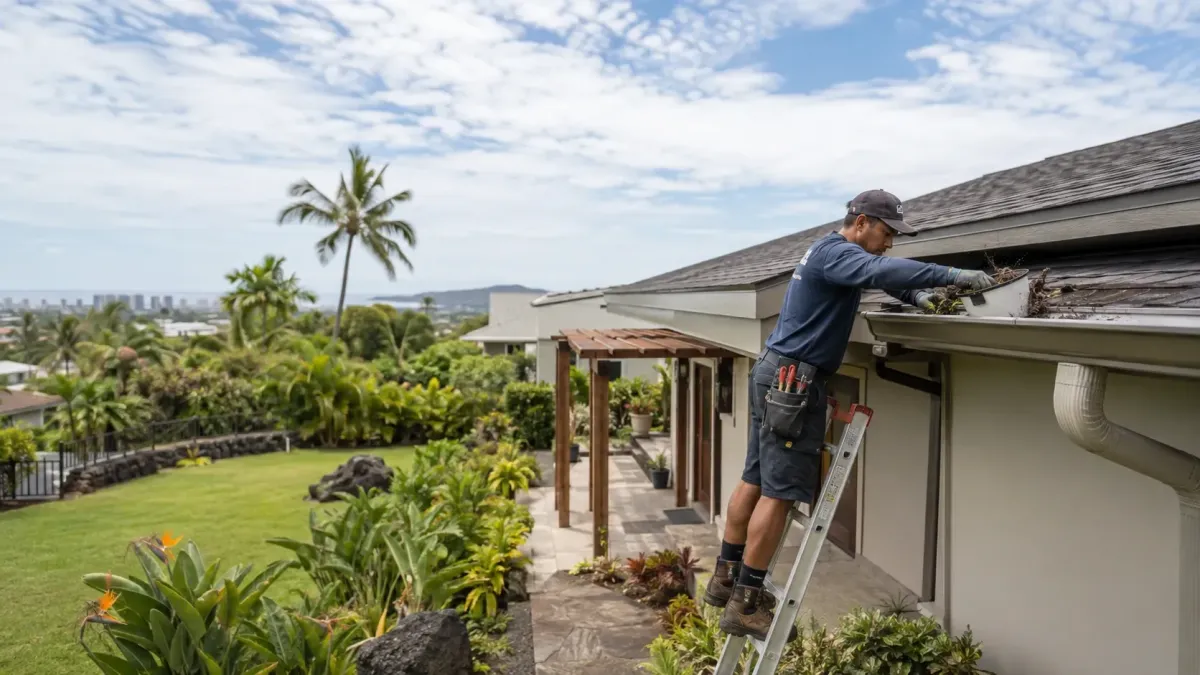
Troughs cleared by hand, downspouts flushed, fasteners checked, debris hauled off.

Leaking seams, sagging runs, pulled hangers and corroded end caps put right.

Guards matched to the debris your roof actually catches, fitted properly.
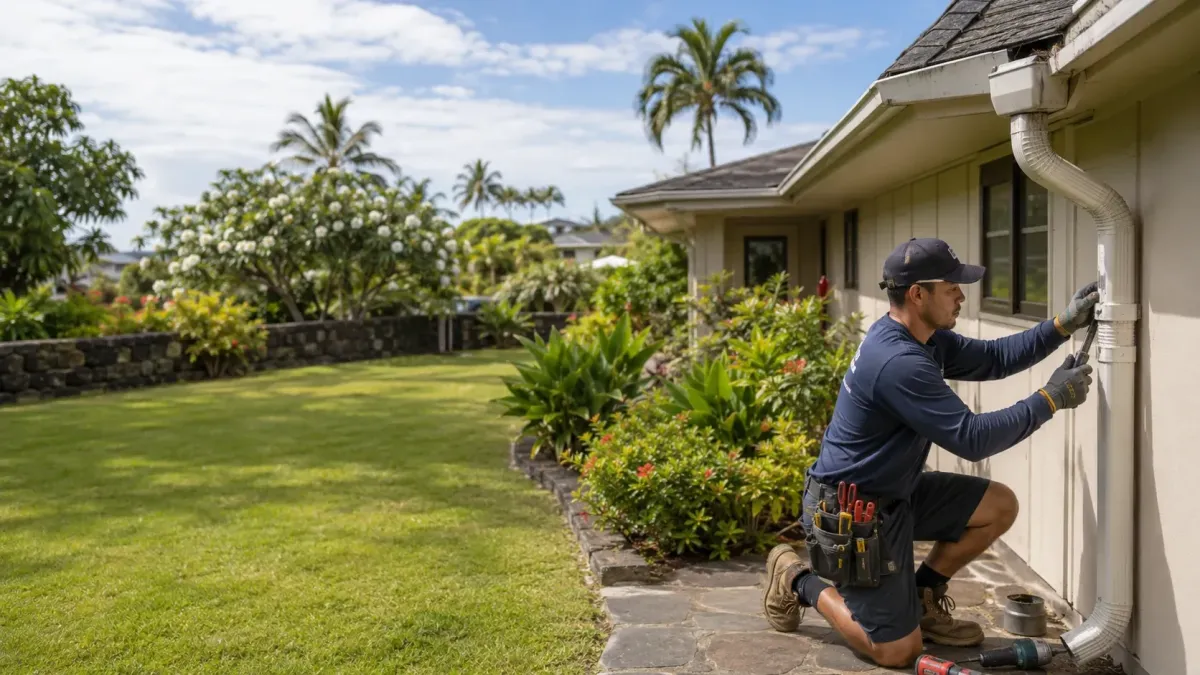
Blocked elbows cleared, separated joints resealed, and discharge redirected away from the wall.
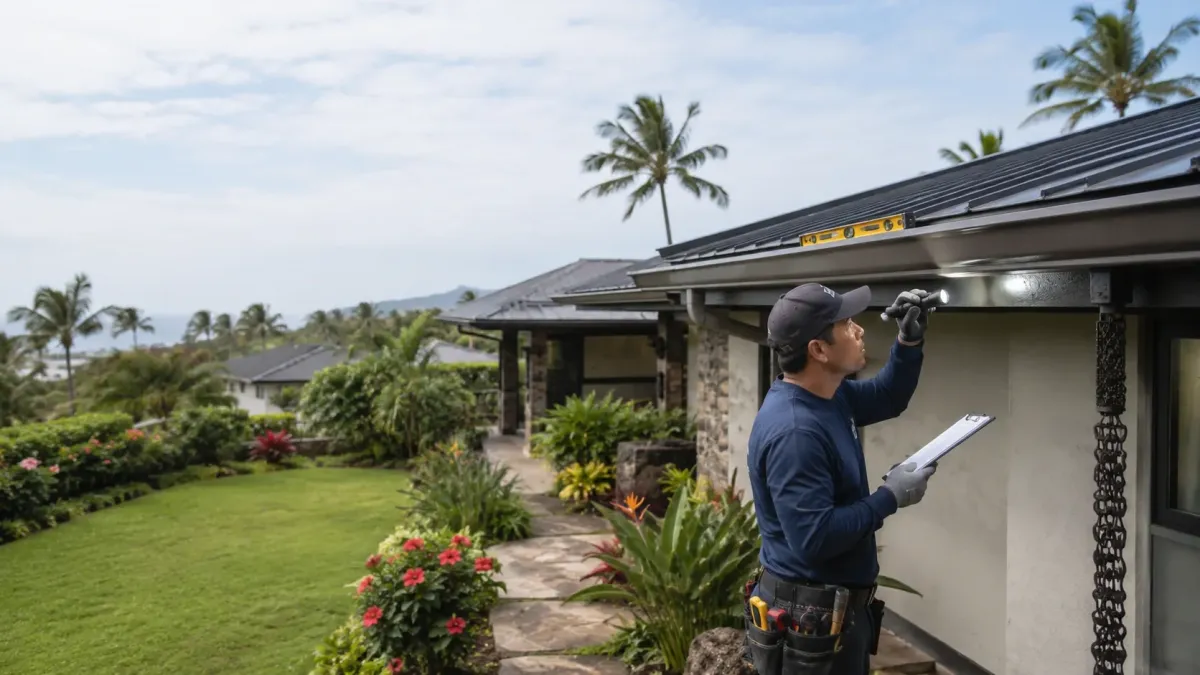
Scheduled visits timed around the wet season, with everything checked each time.
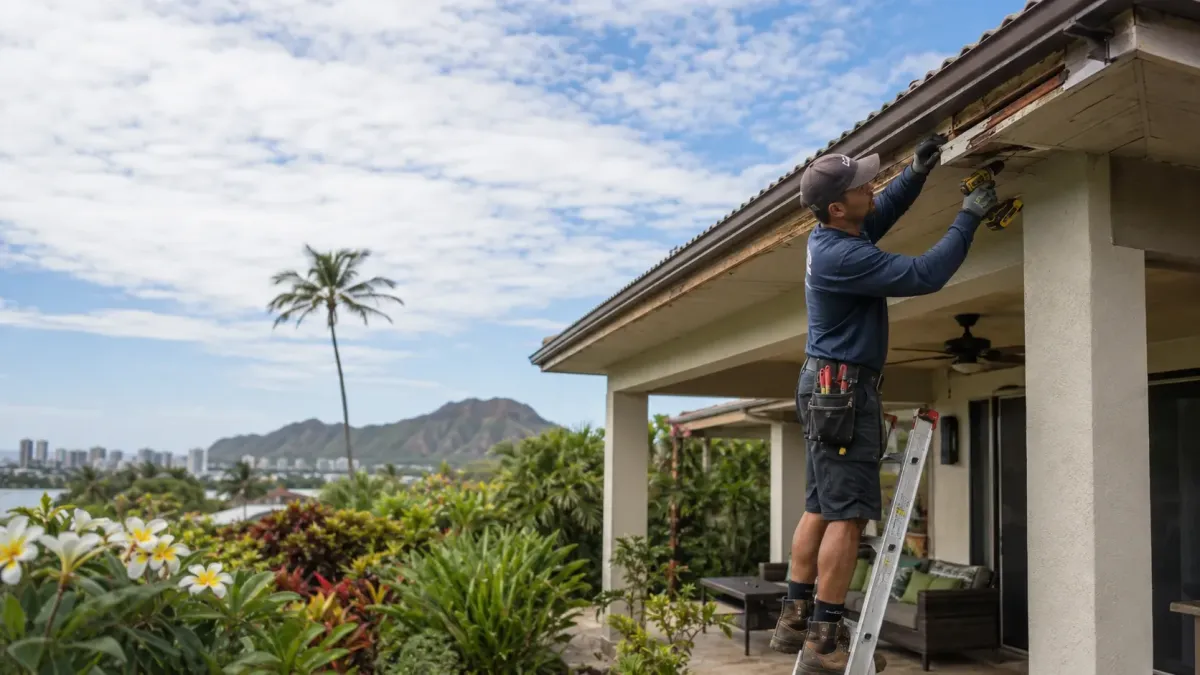
Soft fascia and damaged soffit replaced so fasteners have sound wood again.
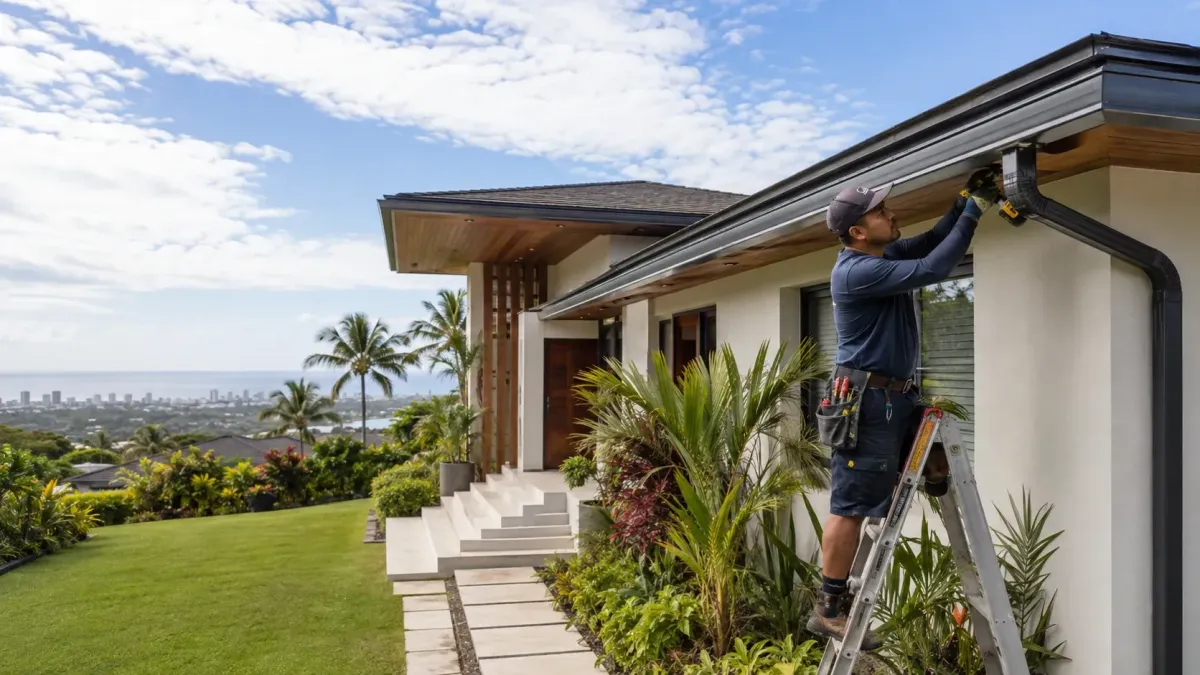
Runs formed on site to the exact length, so there are no mid-run seams.
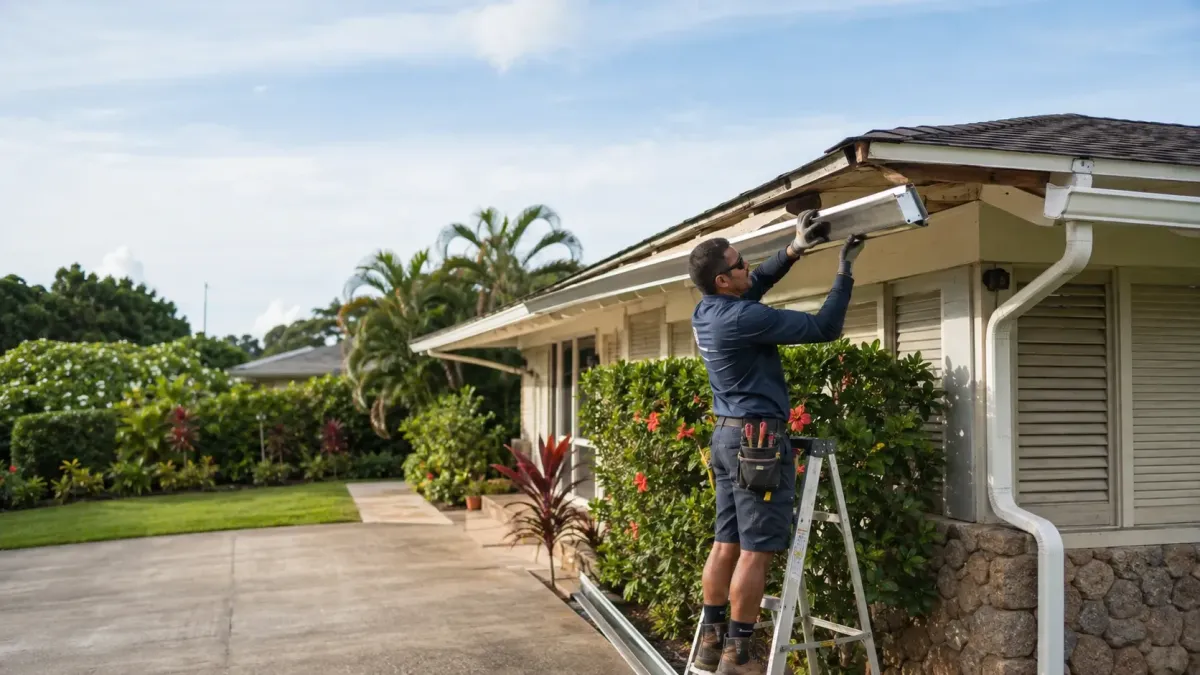
Old runs removed, fascia checked, new system sized and pitched correctly.
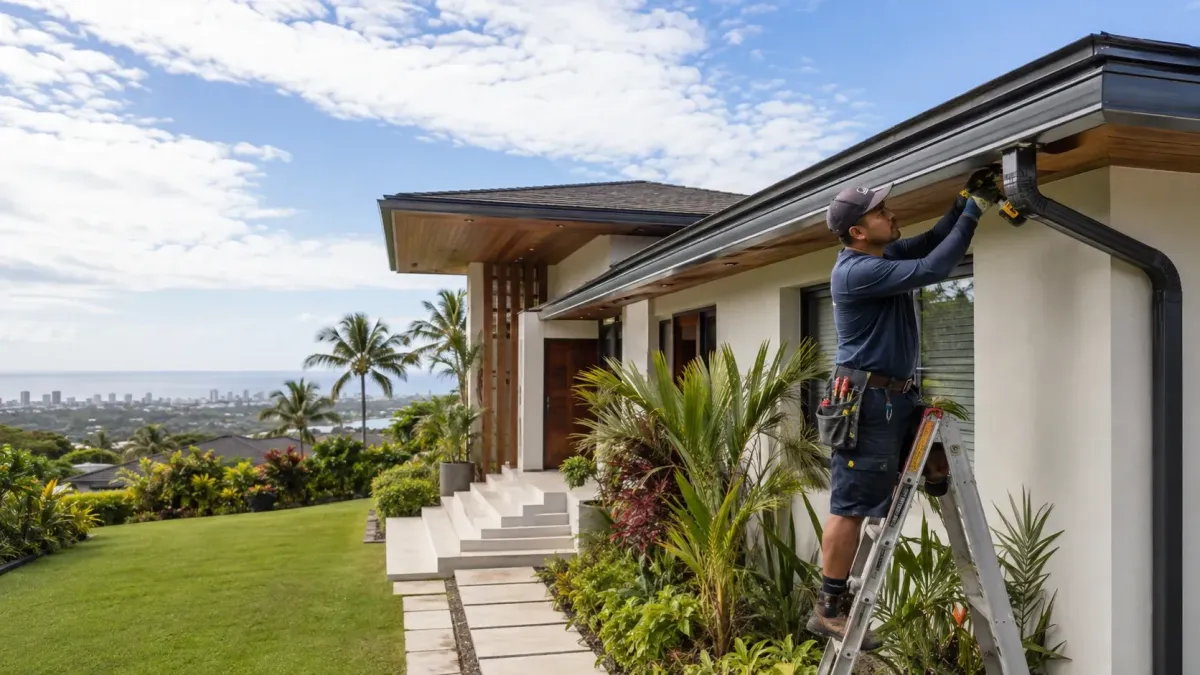
New systems sized to the roof, with outlets and discharge planned properly.
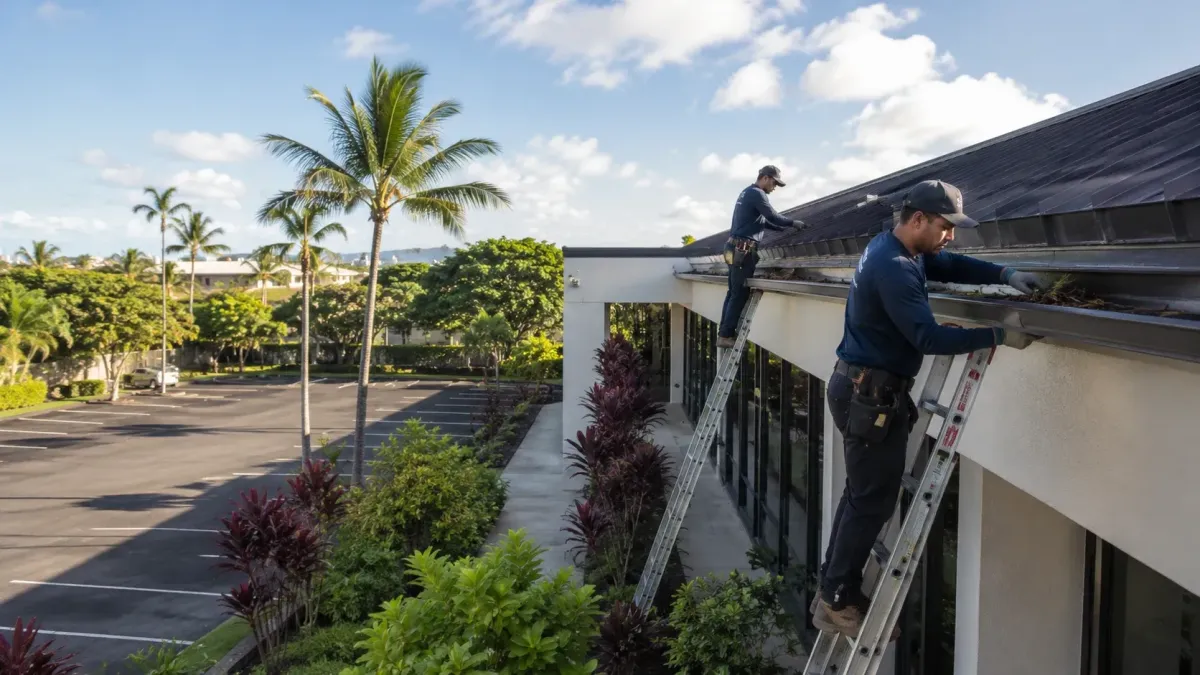
Scheduled gutter service for condominiums, associations and managed multi-building property.
Frequently Asked Questions
Gutter Cleaning can be complex, and we’re here to provide answers to common questions. Here are some frequently asked questions from our clients.
Frequently Asked Questions about gutter cleaning honolulu
How much does gutter cleaning cost in Honolulu?
Most single-story gutter cleanings in Honolulu land somewhere around $252 to $316, or roughly $0.70 to $1.20 per linear foot of gutter. Two-story runs, steep pitches, difficult ladder access and a heavy debris load all push it above that. We quote after looking at the roofline, because footage and access are what actually move the number.
How often should I clean my gutters in Oahu?
Plan on twice a year for most Oahu homes, once before the wet season and once after it. Houses under heavy tree canopy or right against the mountains often need three, because debris arrives constantly rather than in one seasonal drop. Coastal homes can sometimes stretch to two, but they need the fasteners and seams checked each visit instead.
What is the best time of year to clean gutters in Hawaii?
October is the single most useful month, because the wet season runs roughly November through March and you want the system clear before it starts. The second-best time is right after the rains end, when you find out what the winter actually did to the hangers and joints. Cleaning in the middle of the wet season works, but you are usually reacting to a problem by then.
Is professional gutter cleaning worth it?
It depends on the house. A single-story home with easy ladder footing and no canopy overhead is a reasonable job to do yourself. Two-story runs, tile roofs, steep pitches and anything over a lanai or a slope are where people get hurt, and where a missed corroded hanger turns into fascia repair that costs far more than the cleaning did.
What is the best month to get your gutters cleaned?
October, if you are only doing it once. It puts the system in good shape immediately before the heaviest rain months, which is when a blockage does actual damage rather than just looking untidy. If you are doing it twice, pair October with April.
What is the little known trick for gutters?
Watch the downspout, not the gutter. A trough can look reasonably clear from the ground while the elbow at the bottom is completely packed, and that is what sends water back over the front edge in heavy rain. Run a hose into the top of the downspout and time how long it takes to come out the bottom. If it backs up at all, the blockage is below, not above.
Still Have Questions About gutter cleaning honolulu?
Speak With a Trusted Gutter Cleaning Expert Today.
What Our Satisfied Clients Have to Say About
We pride ourselves on delivering great results and experiences for each client. Hear directly from home and business owners who’ve trusted us with their Gutter Cleaning needs.
The Trusted Gutter Cleaning Expert Near You
Ready to hear more about expert services at ?
Contact us today to receive a detailed, no-obligation quote.


